Tag

race relations

Bridges Between Baltimores

By | Tinted Lens | 17 Comments

Race and crime in Baltimore has been top of mind for its residents lately. With our homicide count at 33 for the year and crime escalating daily, there has been much discussion around our problems and what the community and the city are doing to fix them.

ChangeEngine’s own Hasdai Westbrook, has been inspired to put fingers to keyboard followed up by voice to microphone to weigh in on the topic. With To #SaveBmore, Embrace The Wire, Hasdai’s thesis (and one I tend to agree with) is that to make Baltimore whole, we must actively embrace ALL of its parts, from the shiny and new of Harbor East to the older and a bit grimey of Greenmount Avenue.

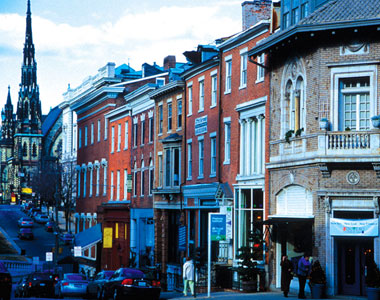
When I first moved to Baltimore, I asked for neighborhood recommendations from everyone I knew here. These were my (white, middle class) aunt and uncle, their friends or contacts (mostly white), and my grad school colleague (you guessed it, also white). They pointed me to the safe ‘I’: Canton, Fells Point, Federal Hill, Mt. Vernon, Charles Village, Hampden, Roland Park.

These places were ‘safe’; they were where people had faith that I could start a new life on the right foot. From their perspectives, other neighborhoods were dangerous areas where people like us just don’t go.

The problem with this is that, while I was raised as a Person Like Us, I look more like the dangerous ‘them.’ While Highlandtown, Hampden, Fells Point and Patterson Park may be seen as trendy and the places to be, these are the same neighborhoods some people don’t go into because there’s a legacy of white violence against black people. Dr. Tara Bynum related this history on the Mark Steiner show last week, also highlighting that we are guided by a small subset of people’s idea of safety. The reason race and crime have come to the fore is because a white woman wrote a piece on her fears of living in the city. So, why do we only discuss issues when white people no longer feel safe?

If you grew up poor and black in Baltimore, there are neighborhoods you may never have been in because they were outside your reference area. To top it off, going to a newly trendy, but historically racist neighborhood is neither enticing nor economically comfortable.

On the other hand, if your opinions are shaped by your lived experience being white, middle class and informed by mass media, it is easy to live in fear of the Wire-inspiring streets of East and West Baltimore.

So how do we mix the two cities? Bike Party each month strives to cross neighborhood boundaries and take folks where they may not usually go, but that’s from the comfort and safety of your bike seat. How do we forge meaningful relationships between neighborhoods?

Healing the city takes more than talking about it. It takes stepping out of your comfort zone and working with people different from yourself towards what we all want: a safe place to life, learn, raise a family and go about the everyday business of living.

So volunteer at a community garden, tutor a student, clean up a park, go to that restaurant across town that looks interesting, but you have never stopped in. It sounds cliché, but every little action adds up.
#SaveBmore – Undoing Racism

By | #SaveBmore, ChangeEngine | 9 Comments

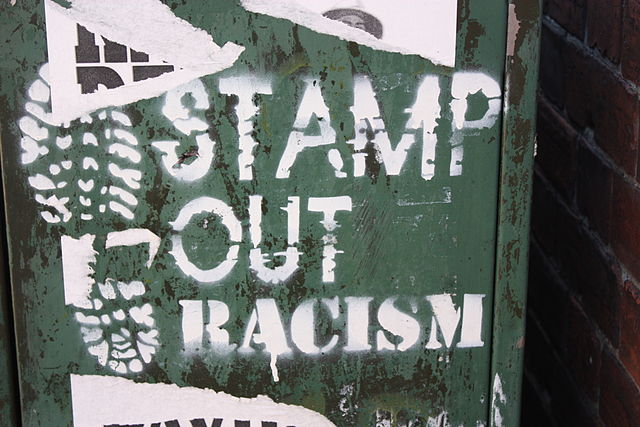
As a white person, I can only speak of undoing racism from that perspective. Therefore, in my opinion, in order to create real transformative change in Baltimore we have to educate ourselves and organize our institutions to help dismantle the structures in place that perpetuate racism. Racism is the cause of the inequity we see every day in Baltimore. In order to really begin to heal and change the city, we all need to understand the history and how racist practices still embedded in our institutions have created the disparities that exist today.

I’m not from here — I was born and raised in Detroit and also lived in Oakland, California. At least in those two cities, which are predominately black as well, race is talked about more widely, whether productive or not, and it is much more obvious. It feels unacknowledged here and very few people talk about the inequity we see every day described in those terms. We talk about lack of jobs or housing or treatment programs. For both blacks and people of color and for whites, it’s likely because of the deeply ingrained internalized oppression and superiority within ourselves that we choose to ignore. We need to look at how the systems we are all involved in work to uphold power and privilege for white people. Just take a look at the criminal justice system. Despite the fact that whites use and deal drugs more than people of color, there is overrepresentation of people of color for nonviolent drug offenses in the system. In fact Black, Latinos and Native American are overrepresented in every aspect of the criminal justice system – from arrests to the court system to incarceration. (Here’s a great resource to explore: Shinin’ the Light on White Privilege by Sharon Martinas.)

This is not a dynamic that can be shifted overnight but takes real effort and understanding of how the system works. Whites especially need to be engaged with other whites in this process. Racism is dehumanizing to all of us. We need a common definition of what racism is, an historical knowledge about what has happened since the founding of this country, and we need to look deeply within ourselves and our institutions on where we can organize and create impact.

For those of us who want to start but don’t know how, we can begin with conversations with others, and seek out knowledge from those with expertise. There are many resources that we can make use of right here in Baltimore – Baltimore Racial Justice Action, Equity Matters and the Peoples Institute for Survival and Beyond. But if we don’t even have the conversation, we will never be able to dismantle something that is truly destroying us all.

IMAGE CREDIT. [Wikimedia Commons].

Tinted Lens

By | Tinted Lens | 10 Comments

“I don’t want no peace, I need equal rights and justice” –Peter Tosh

Language. It encourages the exchange of ideas and information. But merely by opening one’s mouth, it can also betray where you’re from and how people will label you. The words we choose convey much more than their face-value meaning.

But what happens when members of a group use different words? Or the same words with different meaning? How do you move forward? How can you ensure you are actually working towards the same goal?

A few weeks ago, a friend was in a community discussion. She noticed that while the black and longer-term white activists spoke of ‘social justice,’ most of the other white community participants spoke of ‘social change.’

Let’s unpack this: ‘Justice’ is the quality of being just, impartial or fair; the establishment or determination of rights according to the rules of law or equity while ‘Change’ means to become or make something different.

When people speak of social justice, they hearken to a movement rooted in the concept that there is nothing inherently wrong with the black (and wider low-income) community. Rather, social justice takes issue with everyday ‘norms’ that serve to oppress and marginalize that community. The media perpetuates these ‘norms’ whether it be through reports of crime ‘in the black community’ or advertisements showing whites as good/pure while the black actor or model is evil/primal. These seemingly minor yet persistent depictions and images serve to imprint our collective minds with the thought that one type of people (black) is not to be trusted, that they aren’t as educated as the rest of us (white) and that any poverty is due to their own laziness. Social justice then, seeks to eradicate these lies and other barriers and to paint everyone in the same light, judging all by the content of their characters, to quote Dr. King.

This is intrinsically different from “social change,” which seeks to change behaviors, relationships and interactions independent of larger frameworks at play. It’s the difference between asking “what can we do to change this?” rather than asking why things are that way in the first place.

The social justice vs. social change dynamic can cause schisms and failure even when groups are authentic and well-intentioned. I worked in one community where half the group pushed for more community days (social change) and the others wanted to build mentorship programs and civic engagement training (social justice). The group split up and eventually the community day side was successful; but three years later there was only a minor difference in crime and unemployment was as bad as ever.

Social change is (by comparison) easier, it’s sexier, it results in happy photo ops with food and music. Social justice is work. It is shoulder-to-the-wheel every day, countering habits of privilege people don’t even know they have.

In this neighborhood, aligning successful adults with community youth, both ‘at-risk’ and successful, could have provided role models for youth that lacked images of success in their own homes or blocks. Helping youth and young adults vote, participate and make their voice heard in local issues could have lent a student perspective to school board decisions like the removal of music classes and extracurricular activities.

Here, both groups wanted to improve the neighborhood; one thought it could be done only with breaking bread together while the other wanted to tackle the larger issues without regard to celebrating the small successes. Social change is a part of social justice (it’s hard to imagine an effective mentor program without trust) but unless the larger WHY conversation is had and language explained, there is a disconnect and neither will succeed.

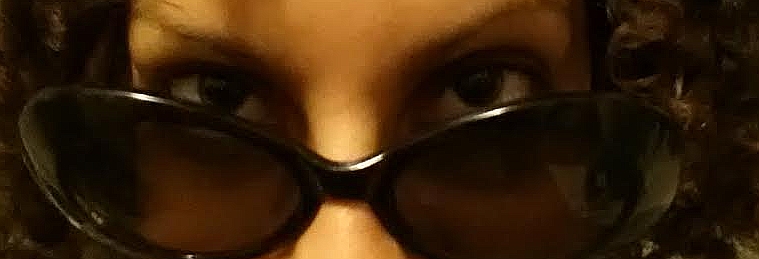
It is this place, at the juncture of two cities: white Baltimore and black Baltimore, that I will endeavor to explore in this column. As a mixed race Baltimore transplant, the lens through which I see this city is tinted by my experiences as a black woman raised in a largely white setting. Right now I have a foot in both Baltimores and am unsure of how to move back and forth between them. I look forward to examining that discomfort zone and discovering just how tinted our lenses really are.


IMAGE CREDIT. [Amber Collins].